
Faulty Brakes On Commercial Trucks Are Far More Common Than Most Drivers On The Road Realize
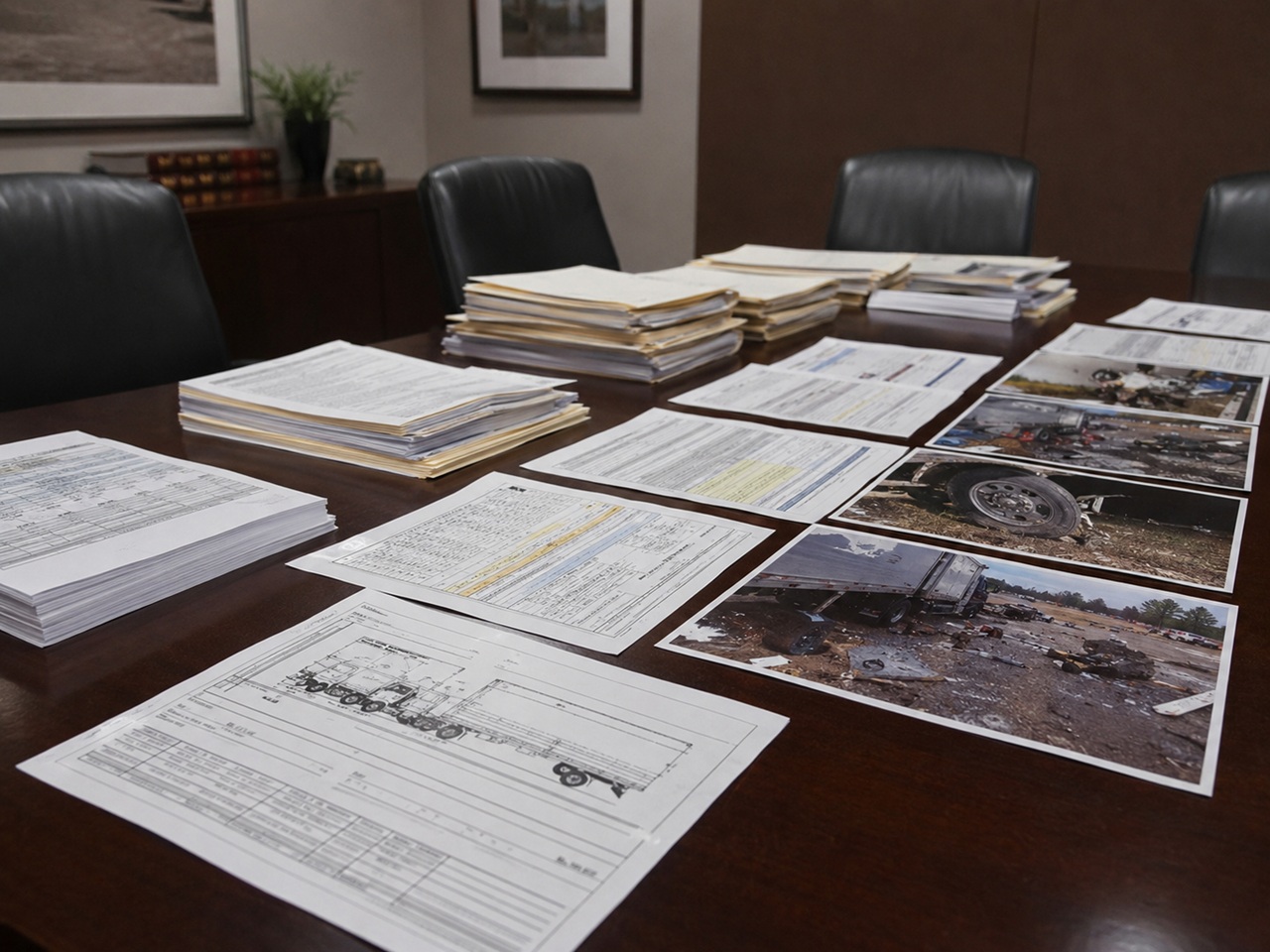
Defective Truck Brakes Can Make Alabama Truck Accidents Even More Devastating
Every day, commercial trucks roll through Mobile on I-10, I-65, and I-165, mixing with passenger cars in traffic patterns that leave almost no room for error. A fully loaded 18-wheeler traveling at highway speed needs the length of a football field to stop under normal conditions. When the brakes are faulty, that stopping distance grows. The truck behind you may not be able to stop in time, and you may never know a problem existed until a serious truck accident occurs.
A recent brake inspection initiative by the Commercial Vehicle Safety Alliance puts the scale of the problem in sharp focus. On a single day in April 2026, certified inspectors conducted 4,021 commercial vehicle inspections across 47 jurisdictions in the U.S., Canada, and Mexico. They placed 574 trucks, 14.3 percent of all vehicles inspected, out of service for brake violations serious enough to make continued operation hazardous. The initiative was not announced in advance.
Our Mobile, AL, truck accident attorneys at Dean Waite & Associates, LLC, handle cases involving negligent trucking companies throughout Alabama. Brake failures are one of the most preventable causes of catastrophic tractor-trailer accidents, and federal law holds trucking companies directly responsible for keeping their vehicles in safe operating condition. Here is what every Alabama driver needs to know about faulty commercial truck brakes and why the problem is more widespread than most people suspect.
How Bad Is the Brake Problem on Commercial Trucks in America?
The April 2026 CVSA Brake Safety Day results are not an anomaly. They are consistent with years of inspection data showing that brake violations rank among the most common reasons for removing commercial vehicles from service. In 2022, CVSA inspectors conducted a similar unannounced campaign and removed 14.1 percent of inspected vehicles from service for brake defects. The 2026 figure of 14.3 percent shows that the problem has not improved.
What makes the 2026 data particularly striking is that the out-of-service rate jumped from 8.7 percent during the prior year’s Brake Safety Day. Inspectors used performance-based brake testers in 10 U.S. jurisdictions and found that 7.45 percent of vehicles tested with that equipment failed to meet the federal minimum braking efficiency standard of 43.5 percent. That means roughly one in 13 trucks physically tested could not stop fast enough to meet federal law.
Brake failures do not happen in isolation. They are often tied to broader maintenance problems, skipped inspections, ignored driver reports, and company decisions that put unsafe trucks on public roads. Those same decisions can become central evidence when FMCSA violations help prove negligence in an Alabama truck crash.
What Federal Regulations Require Commercial Trucks To Have Working Brakes?
Federal law sets detailed brake performance and maintenance standards for commercial motor vehicles. The primary regulations appear in 49 CFR Part 393, which covers required parts and accessories on commercial vehicles, including brake systems.
The regulations establish minimum performance standards for air brake systems, which are used on most tractor-trailers, and hydraulic brake systems. Every brake on every axle must meet specific adjustment, stroke, and performance requirements. Carriers must conduct inspections to identify brake defects before vehicles go on the road. Drivers who discover brake defects must report them, and carriers must repair those defects before returning the vehicle to service.
Federal maintenance requirements also appear in 49 CFR § 396.3, which requires motor carriers to systematically inspect, repair, and maintain every commercial vehicle under their control. When a brake defect that violates federal standards causes a crash, the carrier may face legal consequences for operating with documented safety violations.
What Types Of Brake Defects Are Most Commonly Found During Inspections?
The CVSA Brake Safety Day data identifies specific defect types that cause vehicles to be placed out of service. The 2026 inspection results identified several recurring categories of brake failure that inspectors encounter across commercial fleets.
The most common brake defects found during inspections include:
- 20 Percent Defective Brake Criterion: Inspectors found 313 vehicles in which 20 percent or more of the truck’s brakes were in a condition that impaired braking. Under federal out-of-service criteria, this concentration of brake failure means the vehicle cannot safely stop under real-world conditions.
- Brake Hose and Tubing Violations: Inspectors identified 121 out-of-service violations related to brake hoses and tubing. Damaged, cracked, or deteriorated brake lines allow pressure to escape from the system, directly reducing stopping power when it’s needed most.
- Drum and Rotor Defects: The 2026 inspection campaign focused on drums and rotors, identifying 43 violations, including 21 serious enough to require the truck to be pulled from service. Worn or cracked drums cannot dissipate heat properly and can fail suddenly under heavy braking.
- Braking Efficiency Below Federal Minimums: Twenty-six vehicles tested with performance-based brake testers failed to achieve the minimum 43.5 percent braking efficiency required by federal standards. These are trucks that demonstrably could not stop quickly enough to comply with federal law, yet they were on public roads until inspectors caught them.
- Air Loss Rate Failures: Air brake systems require pressure to maintain stopping force. Trucks that lose air pressure too quickly under a standardized test cannot sustain braking through an emergency stop, which is exactly when brakes matter most.
Each of these defect types represents a failure that a reasonable maintenance program should catch and correct before the vehicle leaves the yard. When trucking companies skip inspections, defer maintenance, or pressure drivers to keep moving despite known defects, the consequences fall on everyone else sharing the road.
Why Do So Many Commercial Trucks Operate With Defective Brakes?
The trucking industry operates under relentless pressure to move freight on schedule. Drivers face time-sensitive delivery windows, carriers face customer penalties for late loads, and maintenance budgets compete with fuel costs, insurance, and driver pay for every dollar of margin. In that environment, brake inspections and repairs can get deferred, minimized, or skipped entirely.
Pre-trip inspections are legally required, but they depend on drivers actually performing them and carriers actually acting on the defects drivers report. Driver inspection reports are only useful when companies take them seriously. If a driver reports brake problems and the carrier sends the truck back out anyway, that decision can become powerful evidence of negligence.
Third-party maintenance contractors add another layer of accountability. Many carriers outsource maintenance to shops that may not hold their technicians to the same standards as an in-house fleet maintenance operation. When a defective truck causes a crash, the carrier may point to the maintenance contractor, and the contractor may point back at the carrier. Untangling who knew what, when they knew it, and what was done about it requires a careful investigation into the trucking company, its repair history, and its safety practices.
How Do Faulty Brakes Cause Truck Wrecks In Alabama?
Brake failure on a commercial truck does not always mean a complete loss of stopping ability. More often, degraded brakes extend stopping distance or create an imbalance in braking force across axles, causing the truck to pull to one side, jackknife, or lose stability in ways the driver cannot quickly compensate for. By the time a driver recognizes that the truck is not stopping normally, the gap between the truck and the vehicle ahead has already closed.
On Alabama’s highways, where I-10 carries heavy truck traffic between Mobile and the Mississippi border, and I-65 feeds commercial freight north from the port, speed compounds the brake defect problem. A truck traveling 65 mph with compromised brakes needs far more distance to stop. In dense traffic or at a sudden hazard, that extra distance is the margin between a near-miss and a catastrophic crash.
Rear-end collisions involving trucks are among the most dangerous crash types, and brake performance directly determines whether a truck driver can avoid them. The Bayway in Mobile, where fog and sudden traffic stops are documented hazards, is exactly the kind of environment where an underbraked truck becomes deadly. Victims of these crashes often never learn that brake defects played a role unless an attorney intervenes quickly to preserve maintenance records, driver inspection reports, and electronic control module data before they disappear.
What Evidence Can Prove Faulty Brakes Caused A Truck Accident?
Truck brake cases depend on evidence that can disappear quickly. The truck itself may be repaired. Digital data may be overwritten. Maintenance records may be incomplete. Driver inspection reports may be difficult to obtain unless someone issues a preservation demand immediately.
Important evidence may include brake inspection reports, repair invoices, driver vehicle inspection reports, maintenance schedules, out-of-service history, electronic control module data, dashcam footage, dispatch communications, and post-crash mechanical inspections. In serious cases, accident reconstruction professionals can analyze speed, braking distance, impact angles, vehicle damage, and physical evidence to determine how the crash happened.
Because trucking companies control much of this evidence, fast action matters. Spoliation letters in Alabama truck accident cases can put the carrier, insurer, and other involved parties on notice that key evidence must be preserved. Without that step, the evidence needed to prove brake failure may be lost before the injured person even knows it existed.
Who Can Be Held Liable When A Truck Crash Involves Defective Brakes?
Truck accident cases involving brake failures are rarely simple. Multiple parties may bear responsibility, and identifying every liable party requires a thorough investigation conducted while evidence still exists.
Depending on the facts, these parties may be legally responsible:
- The Trucking Company: Carriers have a duty to maintain their vehicles. If the company’s maintenance program was inadequate or if documented defects were not repaired, the carrier may face direct liability.
- The Truck Driver: Drivers must inspect vehicles and report any defects. A driver who noticed brake problems but failed to report them, or continued driving despite a known defect, may share responsibility.
- The Maintenance Contractor: If a third-party shop performed brake service negligently or certified an inadequate repair, the contractor may face liability alongside the carrier.
- The Brake Component Manufacturer: When a component fails prematurely due to a manufacturing or design defect, the manufacturer may be liable under product liability law.
- The Cargo Owner or Shipper: Overloaded trucks impose excessive stress on braking systems. If cargo was loaded improperly or in violation of federal weight limits, the party responsible for loading may share liability for the crash.
Determining liability for truck accidents requires looking beyond the driver’s conduct. A brake failure crash may involve the carrier’s inspection practices, a repair shop’s work, the truck’s maintenance history, and the decisions made before the truck ever entered traffic.
How Does Alabama’s Contributory Negligence Rule Affect Truck Accident Claims?
Alabama uses a contributory negligence standard, which bars recovery entirely if the injured person is found to bear any share of fault. Insurance companies and defense attorneys understand this and use it aggressively. In a defective brake case, they may argue that the injured driver stopped too suddenly, changed lanes improperly, failed to react, or otherwise contributed to the crash.
That is why evidence of defective brakes can be so important. If the truck could not stop because the carrier failed to maintain it, the case should stay focused on the company that put an unsafe vehicle on the road. Alabama’s contributory negligence rule in truck accident claims makes early evidence preservation and careful fault analysis especially important.
Trucking companies and their insurers often begin building a defense immediately. Insurance companies in truck accident cases know how to use Alabama’s strict fault rule to pressure injured people into accepting less than they deserve.
How Can A Mobile, AL Truck Accident Attorney Help Me?
The moment a commercial truck crash occurs, the trucking company’s insurance carrier and legal team begin building a defense. Maintenance records get reviewed, drivers get coached, and evidence that could establish brake failure as the cause of the crash has a limited window before it is overwritten, destroyed, or becomes unavailable. Acting quickly is not just an advantage in these cases. It is a necessity.
Our Alabama truck accident lawyers at Dean Waite & Associates have handled commercial truck accident claims throughout the state for years. We know how to subpoena maintenance records, driver inspection logs, repair records, and electronic truck data. Most importantly, we know how to hold carriers accountable under both Alabama law and federal safety regulations.
Our results speak for themselves, including a $6.75 million settlement in a truck accident involving a fatal crash in Mobile. We also secured a $3.5 million settlement after a deadly truck crash in Mobile County, a case where quick action and decisive video evidence helped hold the responsible parties accountable.
If you or someone you love has been injured in a crash with a semi-truck, tractor-trailer, or another large commercial vehicle, make the call that matters. Contact Dean Waite and schedule a free case evaluation with a Mobile, AL truck accident attorney you can count on in a crisis.
“Dean Waite’s office was very thorough and patient. They worked around the clock to ensure that I was satisfied with the outcome of my case, taking the time to explain every detail and every stage of the process. I highly recommend their services.” - M.W., ⭐⭐⭐⭐⭐