Can a Trucking Company Be Liable for Pressuring a Driver to Violate Safety Rules in Alabama?
The Decisions Behind a Truck Crash Can Start Far From the Road
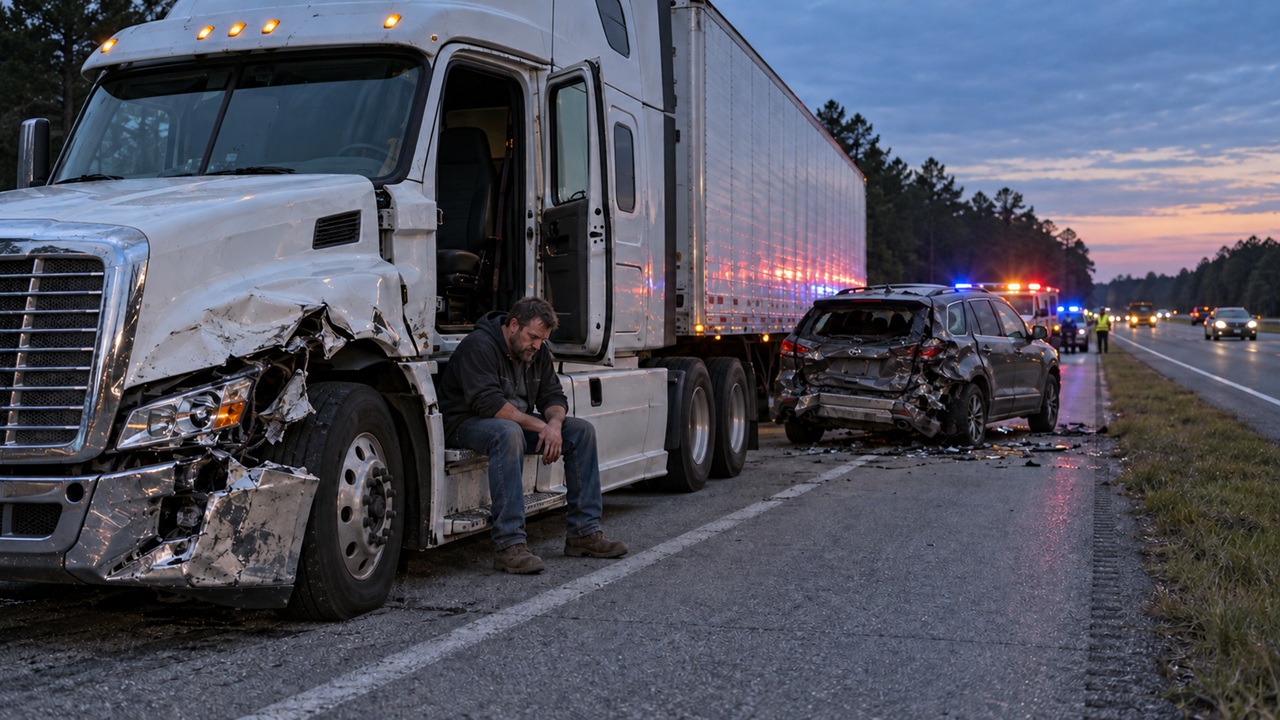
A trucking company can be held liable in Alabama when it pressures a driver to break federal safety rules and that pressure leads to a crash. Pushing a driver past legal hour limits, demanding deliveries on impossible schedules, or ordering them to skip inspections can all put the company, not just the driver, on the hook for the harm that follows.
That matters for anyone hurt in a truck crash along I-10, I-65, or the busy routes around the Port of Mobile. When a company's own decisions set up a driver to fail, the company can be responsible for the full scope of the damage. A Mobile truck accident lawyer can dig into dispatch records, logs, and pay data to uncover that pressure and hold everyone accountable.
|
What Truck Crash Victims Should Know
|
What Federal Law Says About Pressuring Truck Drivers
Federal regulators have recognized that truck drivers often face intense pressure to cut corners. Under 49 CFR 390.6, known as the coercion rule, it's illegal for trucking companies, shippers, receivers, and freight brokers to pressure drivers into breaking safety rules. That includes threatening a driver's job, pay, or future loads if they refuse.
The Federal Motor Carrier Safety Administration lists examples of prohibited coercion, such as pressuring a driver to exceed hours-of-service limits, drive a truck with known out-of-service defects, or operate a vehicle before inspecting it. Separately, 49 CFR 392.6 bars carriers from scheduling a run that can only be completed by breaking the speed limit.
Federal law also protects truck drivers who refuse unsafe orders or report safety violations, making it illegal for employers to retaliate against them. Together, these rules show that lawmakers understand the pressure is real and dangerous. When a company ignores them and someone gets hurt, FMCSA violations can help prove negligence in an injury claim.
Common Ways Trucking Companies Push Drivers Past Safe Limits
Company pressure doesn't always come as a direct order to break the law. It often shows up in schedules, pay structures, and quiet threats that leave drivers feeling they have no choice. Some of the most common forms include:
- Impossible Delivery Windows: Dispatchers set deadlines that can only be met by speeding or skipping required rest.
- Pressure to Ignore Hour Limits: Drivers are told to keep going after their legal driving time runs out or to skip mandatory breaks.
- Threats to Cut Loads or Pay: Drivers who refuse unsafe runs are warned they'll lose work or be passed over for future loads.
- Pay That Rewards Speed: Per-mile or per-delivery pay can push drivers to cover more ground than is safe.
- Unrepaired or Overloaded Trucks: Drivers are sent out with known equipment problems or loads over legal weight limits.
- Driving While Sick or Exhausted: Drivers are pressured to take runs even when they're ill or haven't rested.
Each of these practices turns what might look like a single driver's mistake into a company decision. When a trucking company builds its business around unsafe expectations, it shares responsibility for the crashes that result. Uncovering that pattern takes a careful investigation, often starting with the company's own records.
Hours-of-Service Rules and the Danger of Driver Fatigue
Federal hours-of-service rules limit how long truck drivers can be on the road. In general, a driver hauling property can drive up to 11 hours after 10 consecutive hours off duty, must stop driving after 14 hours on duty, and must take a 30-minute break after eight hours of driving. Weekly limits also cap total on-duty time over seven or eight days.
Most trucks now use electronic logging devices that automatically record driving time. These devices make it harder to fake logs, but they don't stop companies from pressuring drivers to push their limits. That's why hours-of-service logs can build a strong Alabama truck accident case when a driver keeps going just past the limit to make a delivery.
These rules exist because fatigue is deadly in an 80,000-pound truck. Exhausted drivers react more slowly, drift between lanes, and can fall asleep at the wheel. When a trucking company pressures a driver to ignore these limits, it puts every car on the road at risk.
| Type of Pressure | Where the Evidence Hides | Why It Matters |
|---|---|---|
| Unrealistic delivery schedules | Dispatch records, load assignments, and bills of lading | Shows the company set a deadline that required speeding or skipping rest |
| Hours-of-service violations | Electronic logging device data and GPS records | Proves the driver was past legal limits when the crash happened |
| Threats to the driver's job or loads | Text messages, emails, and call logs with dispatch | Shows coercion that federal rules prohibit |
| Pay tied to speed | Payroll records and driver pay agreements | Reveals incentives that rewarded unsafe driving |
| Skipped maintenance | Inspection reports and repair records | Shows the company sent out a truck it knew was unsafe |
| Pressure from a shipper or broker | Contracts, delivery demands, and communications | May make other companies share responsibility |
How Company Pressure Changes Who Pays After a Crash
Trucking companies are generally responsible for the careless actions of their drivers while they're on the job. But when a company pressures a driver into breaking safety rules, the company can also be held responsible for its own wrongdoing. That can include negligent scheduling, poor supervision, inadequate training, or knowingly sending an exhausted driver back on the road.
Alabama law also recognizes a more serious kind of misconduct called wantonness, which means acting with conscious disregard for the safety of others. When a trucking company knowingly pushes drivers to break safety rules, that conduct may support a claim for punitive damages, which are meant to punish especially dangerous behavior and deter it in the future.
Other companies may share responsibility too. A shipper that demands impossible delivery times or a broker that threatens to pull loads from a driver who won't break the rules can also be held accountable. Identifying every responsible party matters, because serious truck crashes often cause losses that exceed what one insurance policy will cover, and Alabama truck accident cases often involve multiple defendants.
Why Alabama's Contributory Negligence Rule Raises the Stakes
Alabama follows a strict rule called contributory negligence, which means an injured person can be barred from recovering any compensation if they're found even slightly at fault for the crash. Only a handful of states still follow this harsh rule, and trucking insurers in Alabama know how to use it.
After a truck crash, insurers often look for any reason to blame the other driver. They may claim the car driver changed lanes too close to the truck, braked suddenly, or was distracted. Even a small finding of fault on the injured person's part can wipe out an otherwise strong claim, which is why it's important to know how contributory negligence affects a truck accident claim.
Evidence of company pressure and driver fatigue can help keep the focus where it belongs. Alabama law also treats wantonness claims differently, and contributory negligence is generally not a defense to wanton conduct. That makes proving a trucking company's deliberate disregard for safety even more important for crash victims and their families.
Evidence That Can Prove a Trucking Company Applied Pressure
Trucking companies control most of the evidence after a crash, and some of it can disappear quickly. Building a strong claim means gathering records like these as soon as possible:
- Electronic Logging Device Data: Shows exactly how long the driver had been driving and on duty.
- GPS and Telematics Records: Track the truck's speed, location, and stops before the crash.
- Dispatch Messages and Call Logs: Can reveal deadlines, threats, and pressure from supervisors.
- Delivery Schedules and Bills of Lading: Show what the company expected and when.
- Driver Pay Records: Can reveal incentives that rewarded speed over safety.
- Maintenance and Inspection Records: Show whether the company sent out a truck with known problems.
- Company Safety History: Prior violations and complaints can show a pattern of unsafe practices.
Some of these records are kept only for limited periods, so a lawyer should send a formal spoliation letter demanding that they be preserved right away. Alabama generally gives injured people two years to file a personal injury lawsuit, but waiting puts critical evidence at risk. Acting quickly gives crash victims the best chance to prove what really happened.
Make the Call That Matters After an Alabama Truck Wreck
A crash with a commercial truck can change a family's life in an instant. When a trucking company's pressure on its driver helped cause that crash, the company should answer for it. Injured people deserve a legal team that knows how to uncover that pressure and stand up to powerful trucking companies and their insurers.
Attorneys Dean Waite and Chase Davis of Dean Waite & Associates, LLC bring more than 25 years of combined experience, and our firm has recovered more than $150 million for more than 8,000 clients across Alabama. Our truck accident results include a $6.75 million wrongful death settlement after a semi-truck crash in Mobile County and a $6.5 million settlement after a DUI crash involving a company truck. We're tough on insurance companies.
We're available 24/7 and will meet you at our Mobile office, at home, or in the hospital. You pay nothing unless we win. Don't hesitate. Contact us today for a free consultation.
"Attorney Dean is also very kind he made sure that me and my family was satisfied in the end! Between Attorney Dean and all his associates I can say they really fought for me and my family!" — S.C.B., ⭐⭐⭐⭐⭐